The best hydroponic gardening system for your classroom is the one that meets your needs.
Here are some questions to ask when considering a system for your classroom:
- What is your goal for growing in your classroom?
- How much space do you have?
- How much time do you have?
- With what age group will you be working?
1. What is your goal for growing in your classroom?
Goals for classroom gardening range from teaching kids healthy eating habits to enhancing STEM and teaching life skills.
Teach Healthy Eating Habits
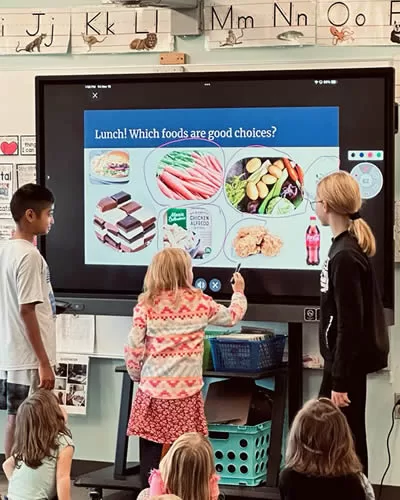
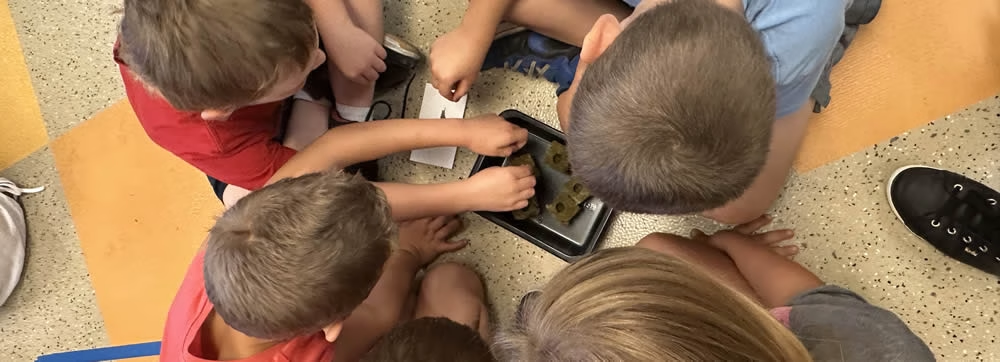
Elementary school is a great place to use hydroponics to teach healthy eating habits. I was helping a 5th and 6th grade class go through a 6-week Tower Garden growing cycle. At the end of that time, the 5th and 6th graders gave healthy eating presentations to the kindergartners and served them a side-salad from lettuce grown in the Tower Garden. It was a joy to watch the older students encourage their younger peers to eat more veggies and less sweets; explain the food pyramid to them; and talk about how the Tower Garden works. All this from the experience of growing their own lettuce!
The Impact of Growing in Your Classroom
When a kid plants a seed, then watches that seed sprout and takes care of the plant until maturity, they’re bound to at least try what they’ve grown. And, oftentimes, they like it because it tastes way better than the veggies they get on their food tray at school.
If you have a classroom of 28 students and want to have a salad party at the end of your growing cycle, then you’ll want to look into a system like the Tower Garden or Harvest Wall. A countertop system, like a LetPot, can provide produce for students to taste, but you’ll need more than one system to provide enough food to feed each student in a typical classroom a side-salad.
Teach STEM

A hydroponic gardening system in your classroom can be used to teach science, technology, engineering, and math. Most people think that agriculture or science classes provide the best place for a hydroponic system, but engineering and math can also be taught since the creators of each system have used technology and engineering to develop them. Students can think through how the systems were made, what parts were used, how the packaging and marketing were developed in order to have the system arrive at their doorstep.
Of course, science is wrapped into growing on a system. The parts of a seed, how the seed is planted and sprouts, the best environment for the plant to grow in, tracking the progress of the growing plant, and learning about pollinators, light requirements and what encourages a plant to flower and fruit, can all be taught with hydropoinic gardening.
Teach Life Skills
Your students need to know how to work in groups. They need to learn how to think critically and problem solve. They need to learn that failure should be a learning experience. All this can be taught by building, planting, and maintaining a hydroponic garden.
I’ve written a Tower Garden curriculum that teaches life skills that’s available in a free, downloadable format.
2. How much space do you have?

Hydroponic systems come in different sizes. The main difference is between a floor model and a countertop model. If you have a corner in your classroom that’s near an outlet, a Tower Garden can be a good choice. The Tower Garden takes up about 3.5 square feet of floor space. It can be placed on a dolly and rolled around the room, and through doors, even when it’s full of water.
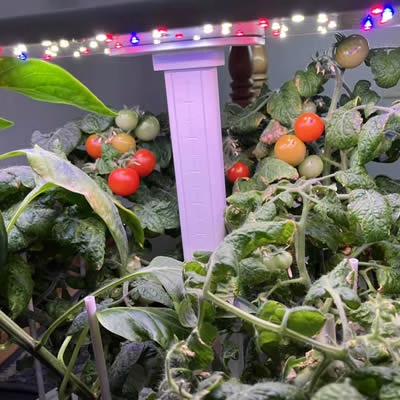
If you want a smaller unit that sits on your counter or desk, LetPot is a good choice for classroom gardening. The LetPot systems grow from 5 – 21 plants and can be carried even when full of water. The smallest (LetPot Mini) can easily be moved to the floor for little hands to enjoy, then moved back to the counter to grow.
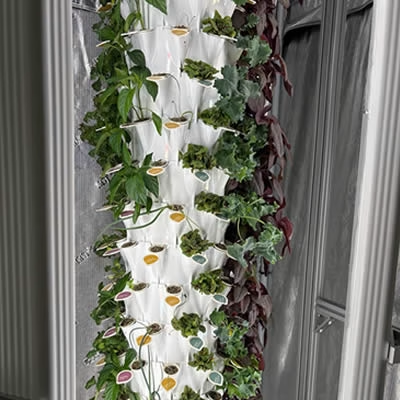
Since the Anu system works best connected to a school’s water source, it can’t be moved once installed and needs to be near a water source. The connection isn’t difficult and a typical sink can be used. The installation is much like installing a dishwasher. The system takes up about 4 square feet of floor space. Learn more about the Anu GrowPod.
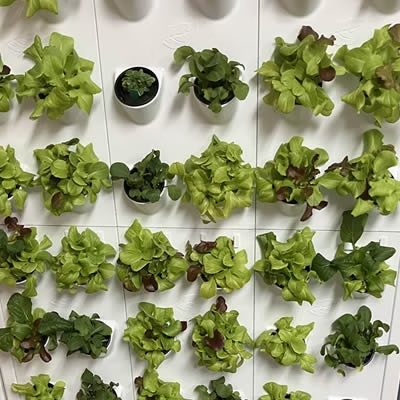
The Harvest Wall can be configured in multiple ways. Since it’s modular, the factory can put one together that’s wider or one that’s taller depending on your needs. They work well in a greenhouse, but can be a little cumbersome in a school classroom since the lights sit on a cart next to the Harvest Wall.
Where is the best place to put a hydroponic system in your school?
What are the best plants to grow in a hydroponic classroom system?
3. How much time do you have?
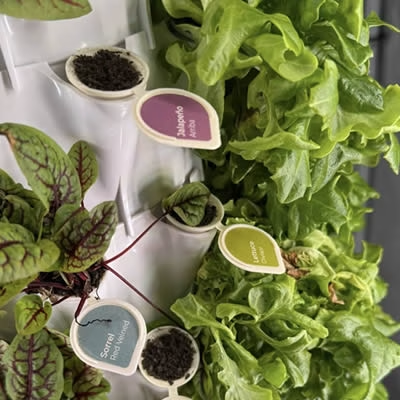
Systems vary in the amount of time required to run them. Anu Growing systems are the easiest to grow on because all the nutrient and proper pH is contained in the grow pods. The system is connected to the building’s water source. Once the pods are placed into the system, nothing needs to be done until harvest. You do have to purchase Anu’s grow pods.
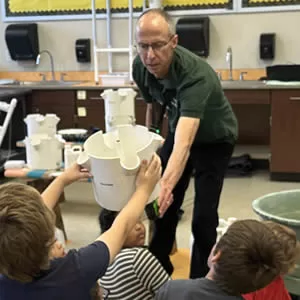
The Tower Garden requires assembly, but this can be a great learning experience for your students. (Tower Garden Lesson Plans and Curriculum) Seeds are started outside of the Tower Garden and grown in rockwool. Once the plant is big enough, it’s moved into the Tower Garden. Water and nutrient are poured into the base and the water should be pH balanced. Once a year the Tower Garden needs to be taken apart and cleaned.

Assembly is quick with LetPot systems. Seeds are planted in sponges that are placed into the system. Water and nutrient are poured into the tank. The systems have an app that can manage light cycles, etc., but they can also be run manually. The LetPot Max has a fill tube that can be placed into an external water source that automatically brings in water when needed. There’s also a nutrient reservoir that automatically brings in nutrient when needed. The LetPot SE is a great choice for school classrooms.

The Harvest Wall comes assembled. The lights are on a separate dolly that sits in front of the system. Water and nutrient are poured into the tank. Plants are grown in rockwool, started outside of the system, then placed into the Harvest Wall after they’ve sprouted.
Parents can be a huge help. I’ve worked with a school that had a team of 6 parents working with 5 Tower Gardens. These parents assisted me when I taught students. Kept an eye on the Tower Gardens. Gave great suggestions on what to grow. Organized a salad party that included students taste testing salad grown in a store with salad grown in a Tower Garden. So if you can recruit parents to help, it’s definitely worth it!
4. With what age group will you be growing on your hydroponic system?
Different systems are good with different ages of students.
A Head Start program purchased 10 LetPot Max systems from me to use with their preschool kids and they love them! The little hands can plant seeds and get up close to enter into the experience.
A Tower Garden works well from early elementary school on up. A kindergarten teacher almost a decade ago, was one of my first sales. She’s still using the Tower Garden every spring with her kids. Junior high and high school students can dive into botany and the science of growing plants. They can also learn life skills like how to make decisions in a group. Skills they’ll use well-beyond high school.
Anu systems are perfect for large-scale, cafeteria growing. The ease of growing makes them ideal for any school cafeteria wanting to serve their students fresh, healthy produce all year around.
What is the Best Hydroponic Gardening System for Your Classroom?
The best hydroponic system is going to be the one that meets your needs. The four systems reviewed in this article are all sold by Keep It Watered. We offer pre-sales help and training and support after the sale. Our goal is to help you be successful in all your classroom gardening goals.
If you’d like to talk through which system will be the best for your school classroom, please contact me.
Related Hydroponic Classroom Articles
How does LetPot Compare to Tower Garden for Schools
What is the Best Hydroponic System to Grow Food for a School Cafeteria